
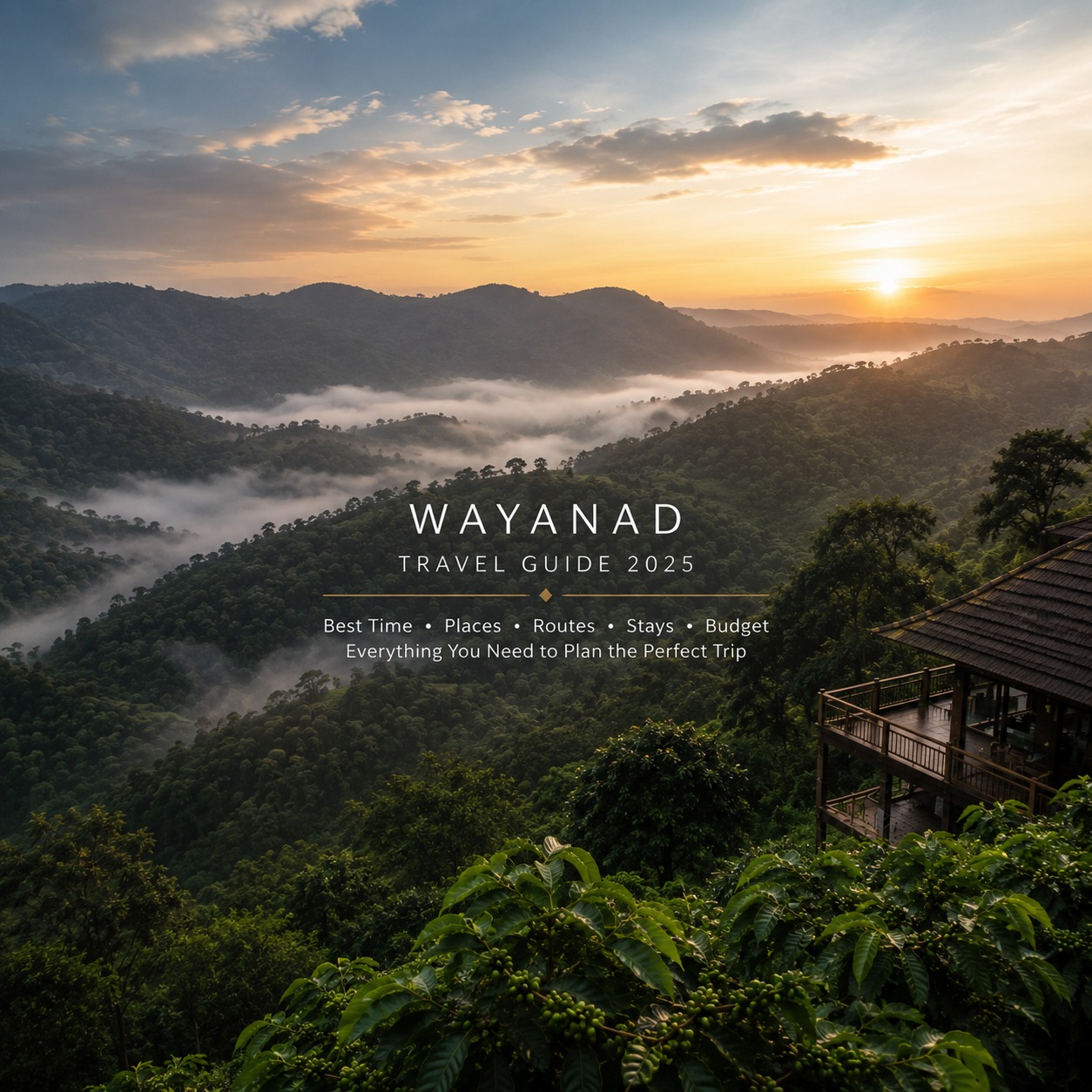
There's a moment that turns first-time visitors into Wayanad regulars.
It usually hits on the climb up — somewhere on the hairpin bends of the Thamarassery ghat. The heat of the plains falls away. The air turns cool and green. The first plantation valley opens below you, half-swallowed in cloud.
People go quiet. Then they start planning the next trip before this one has even begun.
This guide is for that person — the first-timer wondering if Wayanad is worth it, and the returning traveller who wants to do it properly.
It's built for international and GCC travellers flying into Calicut or Kannur, the Bangalore weekend crowd, families with kids and grandparents, honeymooners after somewhere quiet, and photographers chasing mist and dark skies.
We've kept it honest — including the parts most pages leave out: which roads close at night, which sites still shut at short notice, and where the crowds actually are.
Let's get into it.



Why Wayanad Is Different from Munnar, Thekkady, Coorg & Ooty
If you've already "done" the South Indian hill stations, the obvious question is: why add another?
The short answer — Wayanad is the least packaged of the lot.
- Munnar is tea tourism at scale, with traffic jams on the viewpoint roads in season.
- Ooty has been a hill station so long it can feel more like a crowded town than an escape.
- Coorg is the default Bangalore weekend now, so the popular pockets are busy and built-up.
- Thekkady is basically one big attraction (Periyar) with a town wrapped around it.
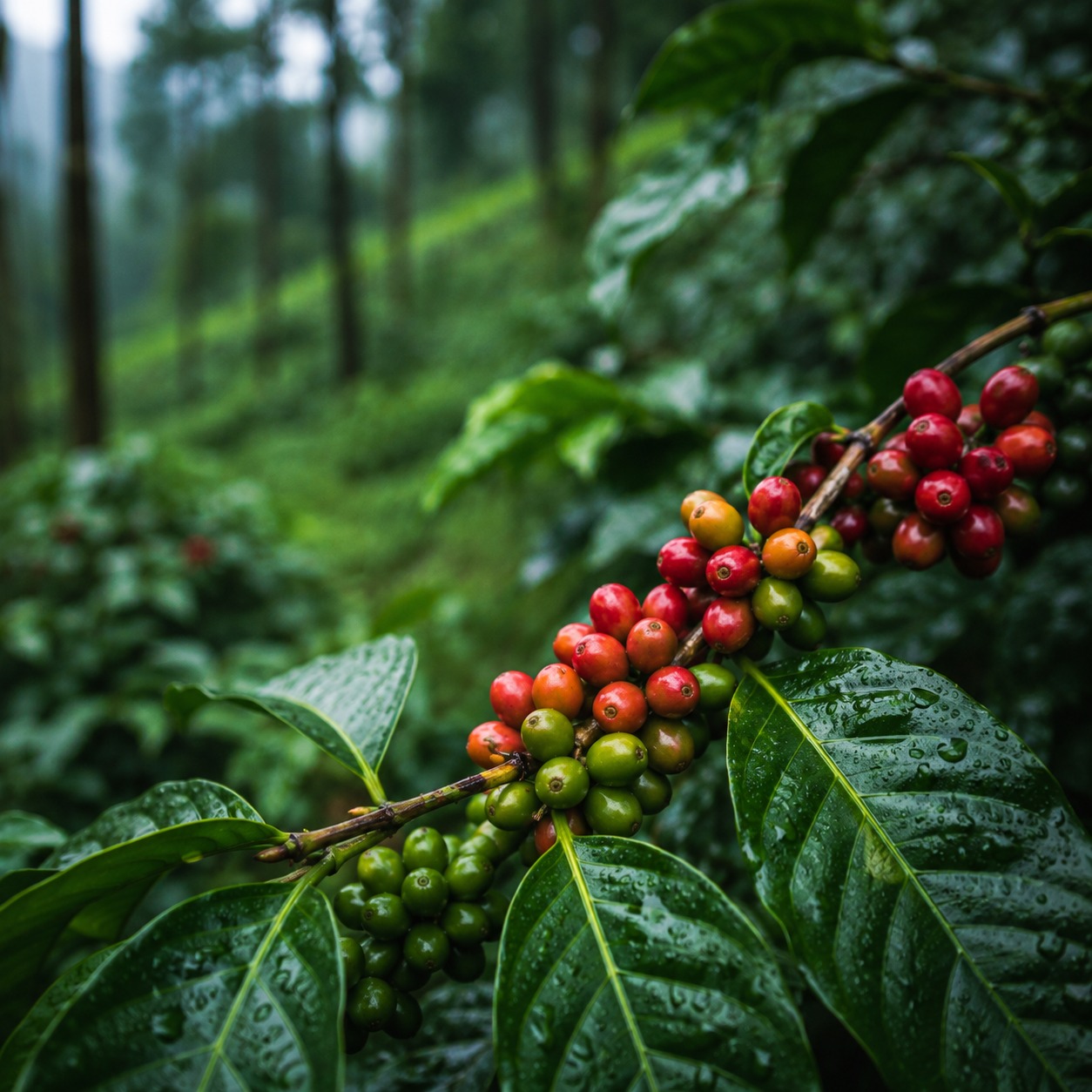
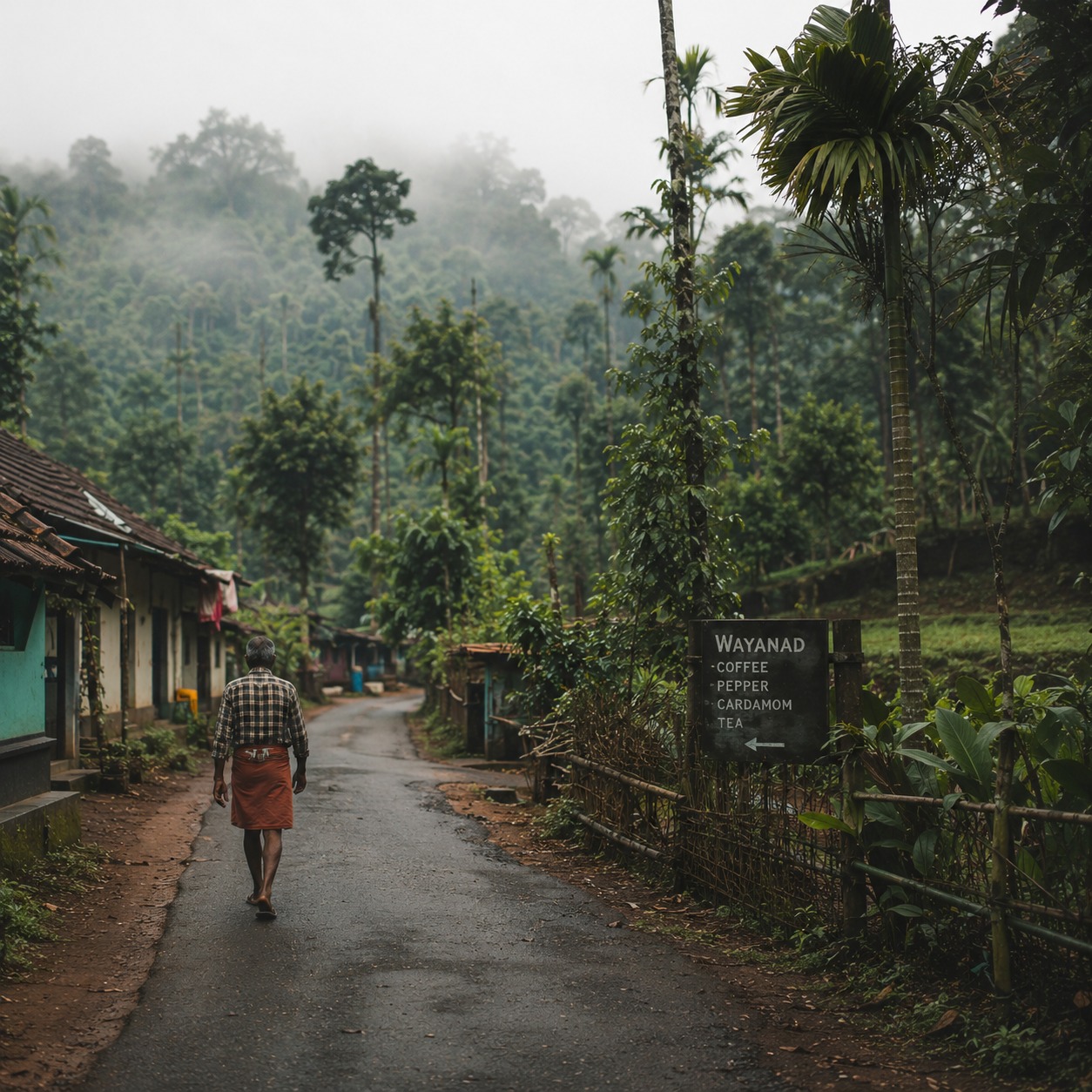
Wayanad is different. It's spread out, agricultural, and lived-in — a working landscape of coffee, pepper, cardamom, and tea, with tribal heritage older than all of it and prehistoric rock carvings older than the pyramids.
There's no single "centre" you're meant to tick off. That's exactly what makes it feel like a place rather than a product.
But it also means you need a plan — the good stuff is scattered across an hour or more of winding road.
Why Travellers Are Increasingly Choosing Wayanad
A few things have shifted in its favour.
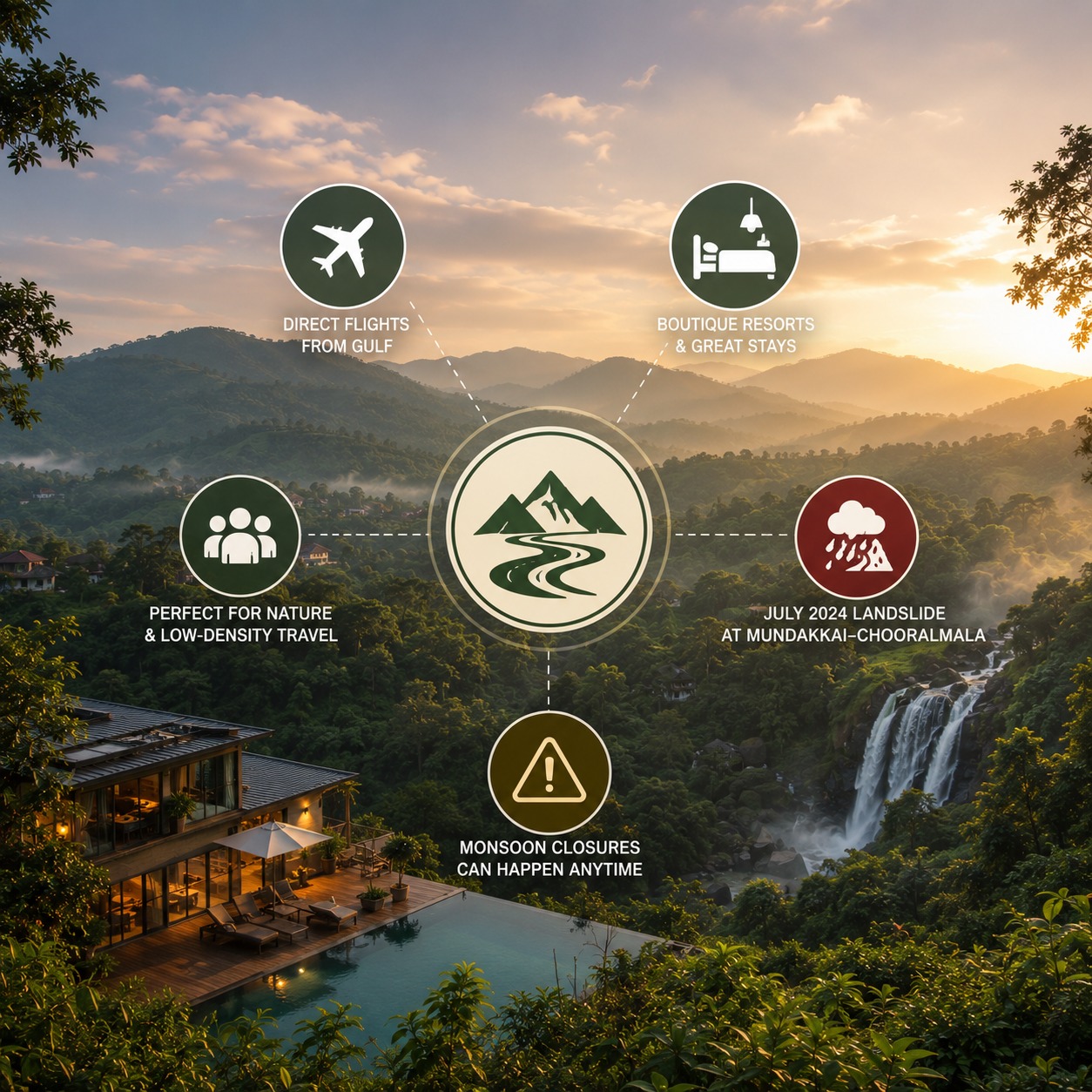
Direct flights from the Gulf into Calicut and the newer Kannur airport put it within easy reach of GCC travellers and the Malayali diaspora.
The boutique-resort scene has matured fast — you can find genuinely good stays without a five-hour drive to a five-star.
And the post-pandemic appetite for low-density, nature-first travel suits a district that was never built for mass tourism.
There's also a sober reason it's in the news. In July 2024, a catastrophic landslide struck the Mundakkai–Chooralmala area near Meppadi — one of the worst disasters in Kerala's recent history.
It affected a specific corner of the district, but it dominated headlines and dampened tourism across all of Wayanad.
The district has reopened and wants visitors back. But authorities are far more cautious now.
The practical takeaway, which comes up throughout this guide: monsoon-season closures of Forest Department sites are now common and can happen at a day's notice. Flexible plans are essential.
Quick Facts About Wayanad
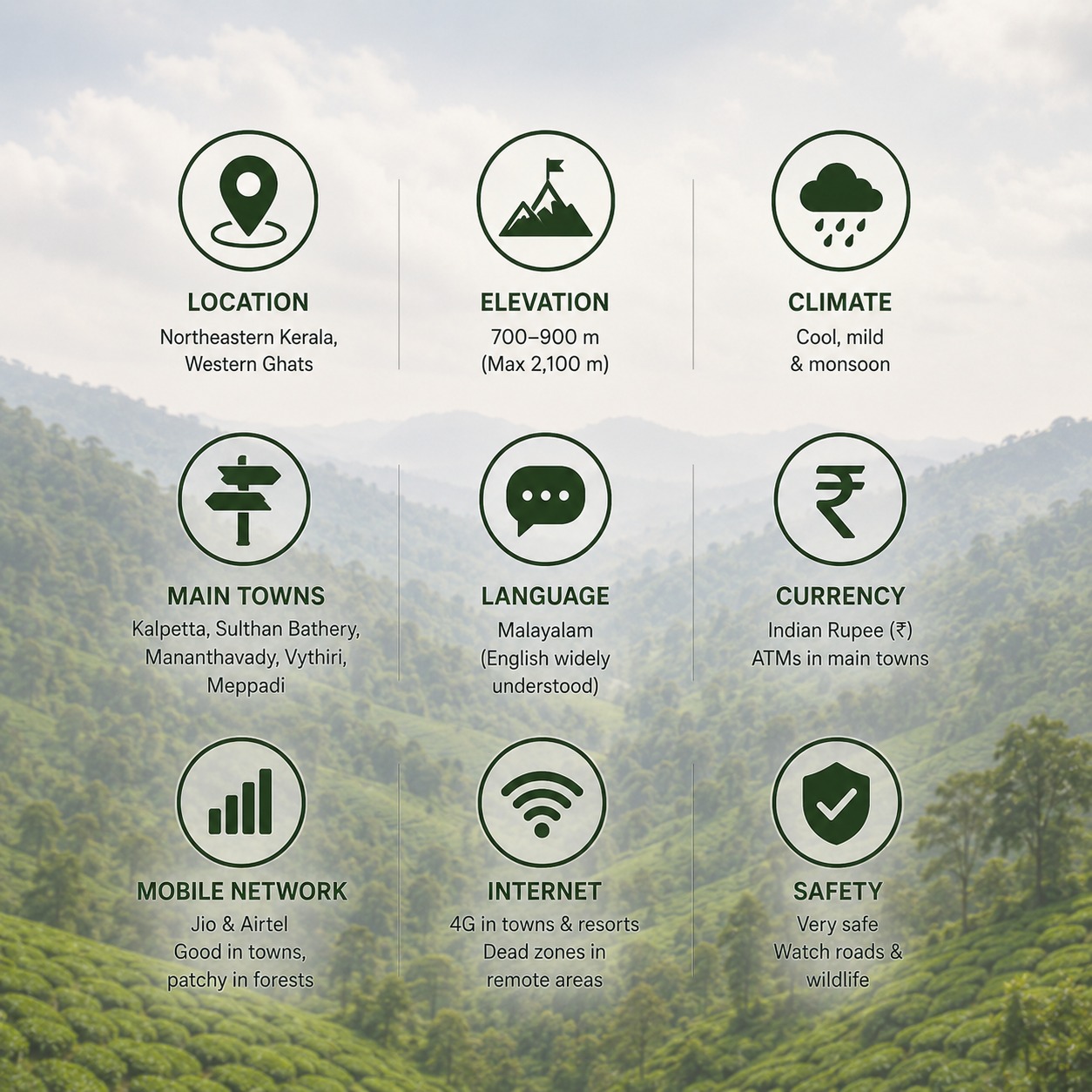
Location — Northeastern Kerala, bordering Karnataka and Tamil Nadu. Part of the Western Ghats and the Nilgiri Biosphere Reserve.
Elevation — Roughly 700–900 m across the plateau, rising to about 2,100 m at Chembra Peak (the highest point).
Climate — Tropical highland: cool and mild year-round by Indian standards, with a heavy southwest monsoon.
Main towns — Kalpetta (district HQ), Sulthan Bathery, Mananthavady, Vythiri, Meppadi.
Languages — Malayalam is primary. English is widely understood in tourism. Some Kannada and Tamil near the borders.
Currency — Indian Rupee (₹). ATMs in all main towns. Carry cash for rural areas, small eateries, and Forest tickets.
Mobile network — Jio and Airtel work well in towns and on main roads. Coverage is patchy-to-absent in forests, deep valleys, and parts of North Wayanad.
Internet — 4G in towns and most resorts. Expect dead zones off the main routes. Download offline maps before you set out.
Safety — Very safe: low crime, friendly locals. The real risks are road-related (fog, hairpins, monsoon) and wildlife in forest-edge zones — not personal security.
Best Time to Visit Wayanad
The key thing to understand: "good weather" and "good waterfalls" don't always overlap.
The most beautiful season — monsoon — is also the one most likely to disrupt your plans. Here's the breakdown.
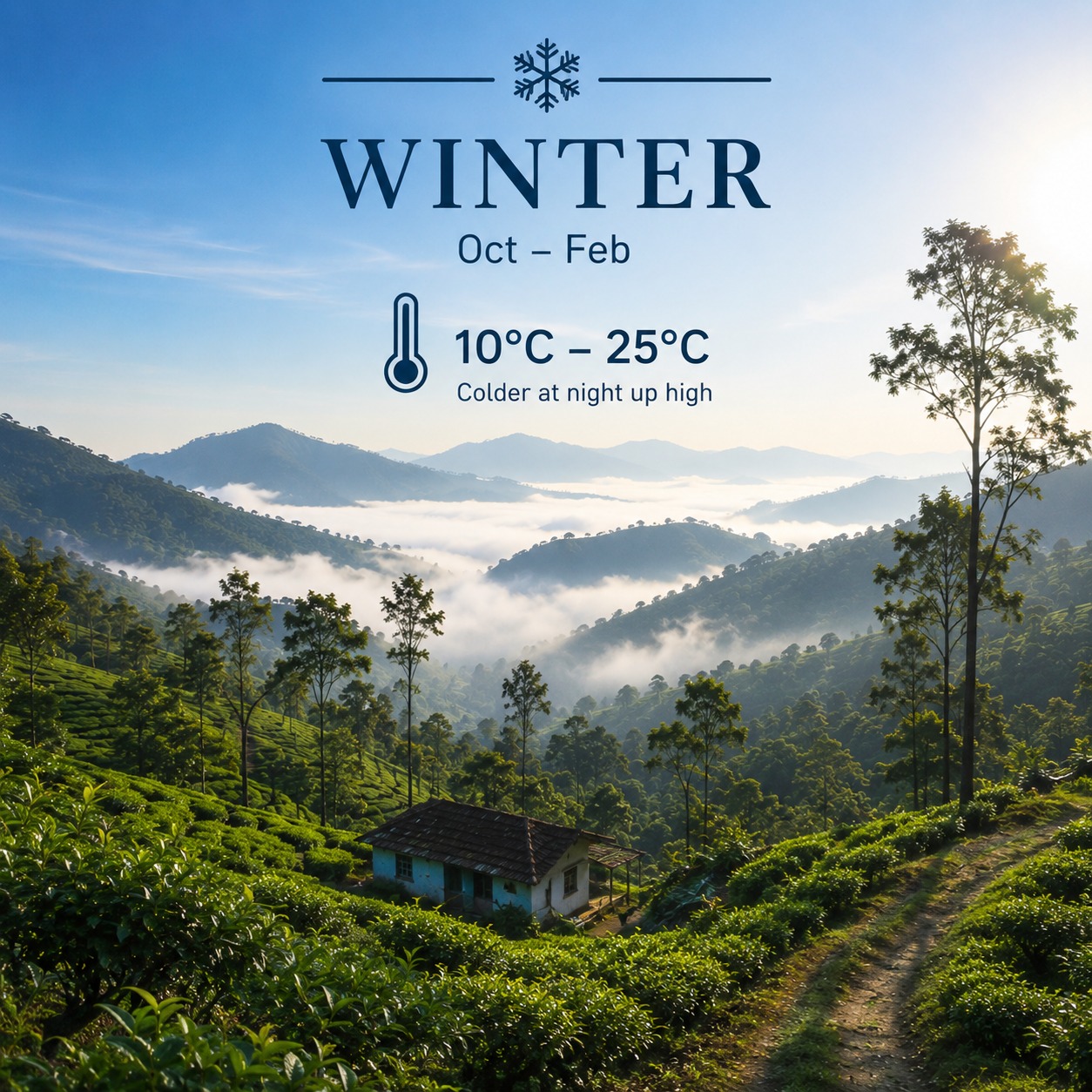
Winter / Post-Monsoon (Oct–Feb) — the sweet spot
Peak season, for good reason. The monsoon has scrubbed the air and topped up every stream, so the land is at its greenest while the skies clear.
Days are pleasant. Nights are genuinely cool — December–January can drop into single digits on high ground at dawn.
Temperature: roughly 10–25°C; colder at night up high.
Pros: best weather, clear views, full waterfalls in Oct–Nov, ideal trekking and wildlife conditions, the clearest night skies of the year for stargazing.
Cons: highest prices and crowds — especially Christmas/New Year, Onam, and long weekends. Book early.
Best for: trekking, plantation walks, Edakkal Caves, safaris, photography, stargazing.
Summer (Mar–May) — quiet and affordable
Wayanad's elevation keeps it far more bearable than the plains. Even "summer" here is mild.
It's the value season: thinner crowds, softer rates, and surprisingly good wildlife sightings as animals gather at shrinking waterholes.
Temperature: roughly 20–35°C; pleasant in the hills, warm on the plateau by midday.
Pros: fewer tourists, better deals, strong wildlife activity, comfortable evenings.
Cons: hazier views; many waterfalls run thin or dry by April–May; lower towns get hot in the afternoon.
Best for: safaris, plantations, caves and museums, lazy resort days.
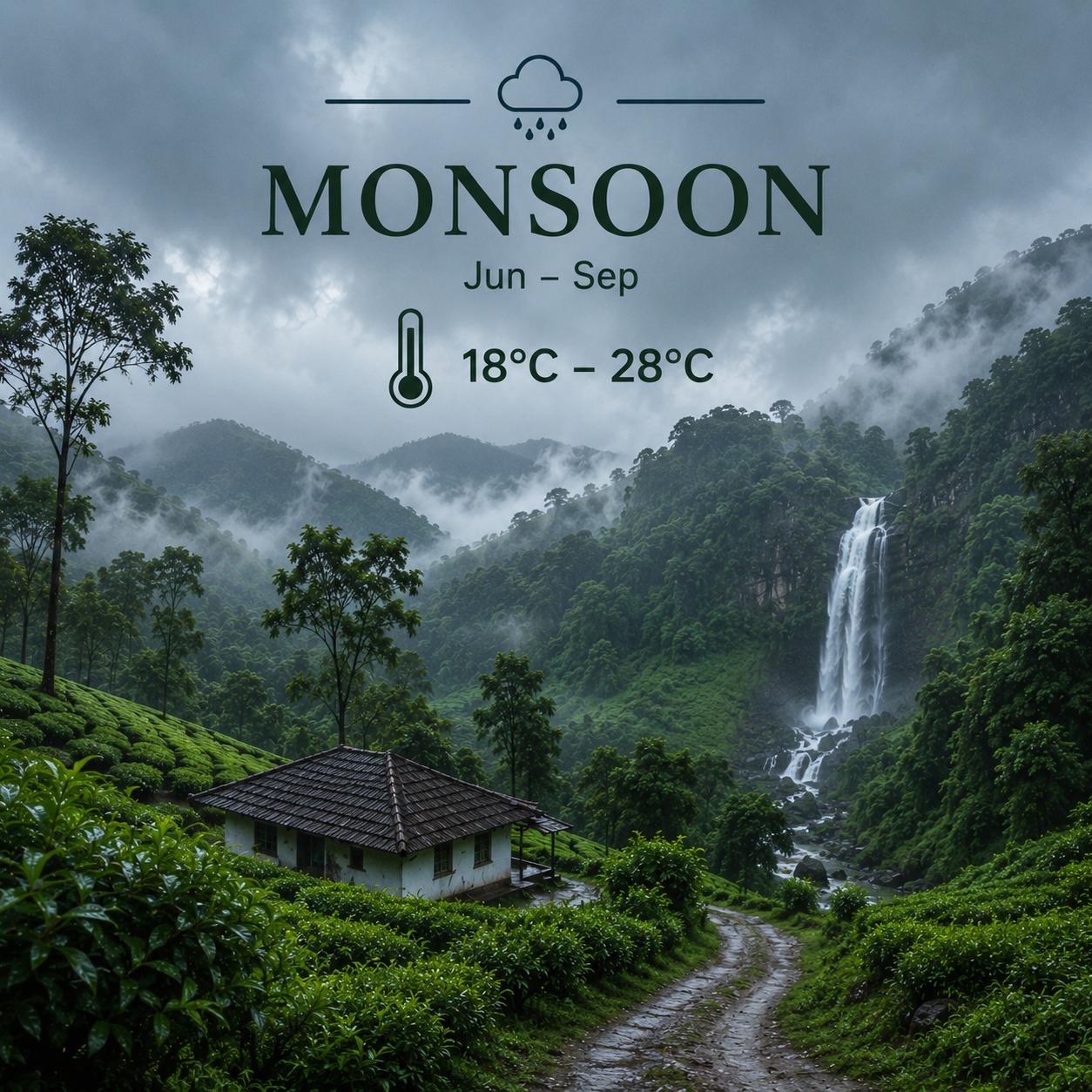
Monsoon (Jun–Sep) — dramatic, green, unpredictable
The southwest monsoon turns Wayanad cinematic — roaring waterfalls, mist over the ridgelines, coffee in bloom. Photographers love it.
But this season demands flexibility.
Heavy-rain "red alert" days trigger precautionary closures of Forest sites (treks, waterfalls, safaris, Kuruva Island). Roads can be affected. After the 2024 landslide, authorities suspend activities readily when the rain spikes.
Temperature: roughly 18–28°C.
Pros: peak greenery, waterfalls at full force, lowest crowds, moody and atmospheric.
Cons: frequent short-notice closures, slippery trails, leeches in the forest, fog on the ghats, occasional landslide advisories.
Best for: resort retreats, plantation stays, photography, slow travel. Keep an open itinerary and check advisories daily.
Bottom line: For a first trip with a fixed schedule, aim for October to March. If you want the green, thundering-waterfall version and can stay flexible, September is a beautiful, quieter compromise.

How to Reach Wayanad
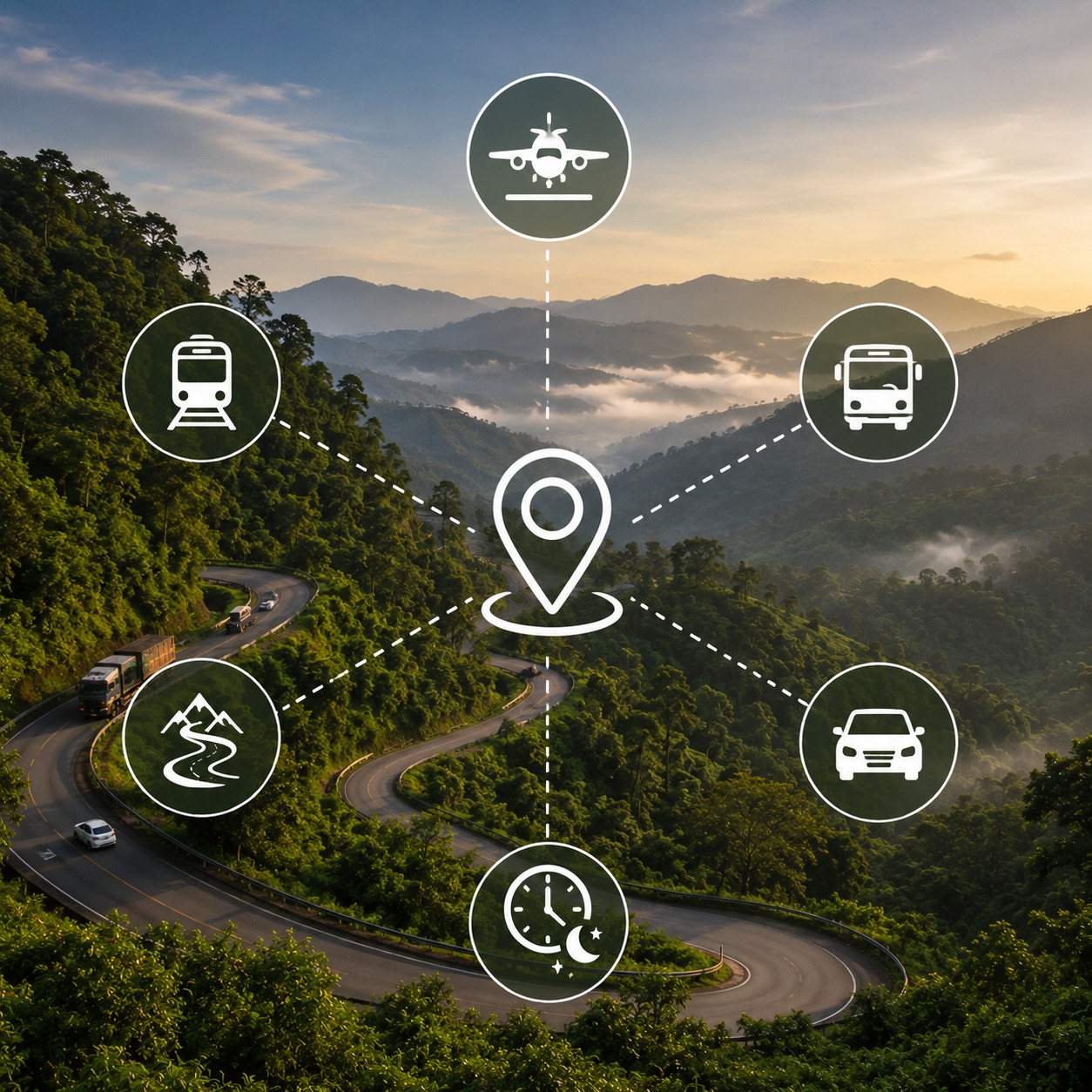
There's no airport or railway station inside Wayanad. You arrive overland through one of the ghat roads — and which one matters more than most people realise.
Two routes come up again and again:
Thamarassery Churam — the famous nine-hairpin climb on NH766 between Adivaram (near Kozhikode) and Lakkidi. The main, busiest gateway from the Calicut/Kochi side. Scenic, but it backs up with traffic.
Kuttiady Churam (Boys Town route) — a quieter, gentler ghat further north, toward Padinjarathara and North Wayanad. Fewer trucks, less traffic. The locals' shortcut into the Mananthavady side.
And one rule that catches out almost every first-time road-tripper:
Bandipur night traffic ban: The NH766 stretch through Bandipur Tiger Reserve (the Mysore–Gundlupet–Muthanga corridor) is closed to all vehicles from 9:00 PM to 6:00 AM to protect wildlife. Two-wheelers face an even earlier cut-off.
If you're driving from Bangalore or Mysore and you'll hit that forest after 9 PM, you either wait until 6 AM or take the longer northern detour via Gonikoppal–Kutta. Plan your departure around this.
From Bangalore
The classic road trip: about 270–290 km, 6–7 hours depending on route and Bandipur timing.
Standard line: Bangalore → Mysore → Gundlupet, then either through Bandipur–Muthanga toward Sulthan Bathery/Kalpetta (mind the night ban), or via Gonikoppal → Kutta → Tholpetty into North Wayanad.
Overnight KSRTC and private buses run to Kalpetta and Sulthan Bathery. Self-drive and taxi are both popular. Leave early to clear Bandipur before dusk.
From Mysore
The shortest major-city approach: roughly 115–140 km, 3–3.5 hours, via Gundlupet.
Mysore makes a sensible halfway halt for Bangalore travellers who want to avoid the night ban entirely.
From Kochi (Cochin)
About 270 km, 6 hours, usually via Thrissur and Kozhikode, then up the Thamarassery ghat.
This is the route if you're flying into Cochin (COK) and pairing Wayanad with the coast or backwaters.
From Calicut (Kozhikode)
The closest major hub: roughly 85–100 km, 2.5–3.5 hours up the Thamarassery Churam.
Calicut International Airport (CCJ) is the nearest airport (~90–100 km). Kozhikode Railway Station (CLT) is the nearest mainline railhead. For most international and GCC arrivals, this is the gateway.
From Kannur
Around 110–120 km, 3.5 hours, often via the Kuttiady or Thalassery ghat into North Wayanad — great if you're staying around Mananthavady or Tholpetty.
Kannur International Airport (CNN) has grown into a genuinely convenient option, especially for the north and for Gulf flights.
From Dubai & the GCC
Three sensible entry airports, all with strong Gulf connectivity:
- Calicut (CCJ) — the traditional Malabar gateway, heavily served from across the GCC, closest to central Wayanad.
- Kannur (CNN) — newer, often less congested, well placed for North Wayanad.
- Kochi (COK) — the largest, useful if combining Wayanad with the rest of Kerala.
From any of them, pre-arrange a private transfer or taxi (3–4 hours). Don't gamble on app-based cabs — they thin out fast once you leave the city. Many resorts arrange airport pickups; confirm at booking.
How Many Days Do You Need?
For most travellers: 3 to 4 days.
The attractions are an hour or more apart on slow mountain roads, so a packed two-day trip means more driving than discovering.
Two days works as a focused taster. Five days is luxurious and lets you go deep. Here are realistic itineraries.
2-Day Itinerary (focused taster)
Day 1: Edakkal Caves in the cool morning → Wayanad Heritage Museum → Phantom Rock → easy plantation walk near your stay in the evening.
Day 2: Banasura Sagar Dam and boating → a waterfall (Soochipara, or the gentler Kanthanpara depending on season) → sunset viewpoint on the drive back.
Best for a long weekend from Bangalore or Calicut. Pick one zone and don't crisscross the district.
3-Day Itinerary (the sweet spot)
Day 1: Edakkal Caves → Heritage Museum → Phantom Rock.
Day 2: Early safari at Muthanga or Tholpetty → Soochipara Falls → Karlad Lake activities (zip-line, kayaking) if you want a thrill.
Day 3: Banasura Sagar Dam → Kuruva Island (if open) or a North Wayanad plantation drive → slow last evening.
This is the itinerary most people should book.
4-Day Itinerary (do it properly)
Add a full slow day — no driving. A guided estate walk, a long breakfast, a coffee or spice tasting, and an evening of stargazing.
Use the extra time to fit a sunrise viewpoint (Neelimala or Lakkidi) and, for the adventurous, the off-road 900 Kandi trail and glass bridge near Meppadi.
5-Day Itinerary (deep and unhurried)
Build it around two bases.
Two or three nights in the south-central zone (Vythiri/Meppadi) for caves, falls, and Chembra-area scenery. Then shift to North Wayanad (Mananthavady/Tholpetty) for Kuruva Island, Tholpetty safari, Thirunelli temple, Pakshipathalam, and quiet plantation country.
Splitting your stay cuts daily driving dramatically — and shows you two genuinely different sides of Wayanad.
Best Places to Visit in Wayanad
One note first.
Several headline attractions are run by the Forest Department and can close at short notice during heavy-monsoon alerts or for conservation — especially after the 2024 landslide.
Always confirm the current status of treks and safaris (with your resort or the Forest office) the day before. Where access is restricted, we've flagged it.
Edakkal Caves
What it is: Two natural rock shelters on the Ambukuthi Hills near Ambalavayal, famous for petroglyphs — rock carvings of humans, animals, and symbols, the oldest dating back thousands of years. One of the only sites in India with Stone Age carvings of this kind.
Why visit: Rare history, plus sweeping valley views from the top. The closest Wayanad gets to a "must-see."
Best time: Early morning, Oct–March. A daily visitor cap (around 1,920) means it can fill by midday in peak season — go early.
Time required: 2–3 hours including the climb.
Difficulty: Moderate — a 30–45 min uphill walk plus a few hundred stone steps and narrow passages.
Family: Good for active families and older kids. Tough for very young children, the elderly, or anyone with mobility issues. Closed Mondays.
Soochipara Falls (Sentinel Rock Waterfalls)
What it is: A dramatic three-tiered waterfall near Meppadi/Vellarimala, plunging down a sheer cliff into a pool.
Why visit: One of the district's most spectacular falls, with rock-face views and (water permitting) a swim.
Best time: Oct–Feb for strong, safe flow. Runs thin or dry in peak summer; hazardous in heavy monsoon.
Time required: 2–3 hours including a 1.5–2 km trek down and back.
Difficulty: Moderate — the return climb is the hard part.
Family: Fine for fit families. Not ideal for toddlers or the unsteady. Confirm it's open in monsoon.
Banasura Sagar Dam
What it is: The largest earthen dam in India, set against the Banasura hills, with a reservoir dotted by small islands.
Why visit: Big-sky scenery, speedboat and pedal-boat rides, an easy outing.
Best time: Mornings; year-round, fullest post-monsoon.
Time required: 2–3 hours.
Difficulty: Easy.
Family: Excellent — one of the most family-friendly stops in Wayanad.
Chembra Peak
What it is: Wayanad's highest peak (~2,100 m), famous for the heart-shaped lake, Hridaya Saras, midway up the trail.
Why visit: The signature Wayanad trek and one of the finest viewpoints in the Western Ghats.
Best time: Sep–Feb, early morning. Forest permit and guide required.
Time required: Roughly 4–6 hours round trip to the lake.
Difficulty: Moderate to hard — steep, grassy, exposed.
Family: Fit teens and adults only.
Important: The actual summit has long been restricted (you trek only to the lake), and access has been further affected by post-landslide and monsoon closures. Confirm current status with the Forest/VSS office before planning your trip around it.
Kuruva Island (Kuruvadweep)
What it is: A protected river delta of islets on the Kabini in North Wayanad, reached by bamboo raft.
Why visit: A serene, low-key nature experience away from the main circuit.
Best time: Post-monsoon to winter, once river levels are safe. Closed during monsoon when the river runs high.
Time required: Half a day including travel.
Difficulty: Easy walking once across.
Family: Good, but supervise children near water.
Tholpetty Wildlife Sanctuary
What it is: The northern range of the Wayanad Wildlife Sanctuary, near Mananthavady and Thirunelli, bordering Karnataka's Nagarhole.
Why visit: Quieter and more atmospheric than Muthanga — favoured by serious wildlife watchers. Elephants, gaur, deer, rich birdlife; tigers and leopards present but rarely seen.
Best time: Oct–May. Safari slots usually morning (~7–10 AM) and evening (~3–5 PM).
Time required: A 2-hour jeep safari plus travel.
Difficulty: Easy (you're in a jeep).
Family: Good. Book the forest jeep at the gate; carry ID. Ideal if you're staying in North Wayanad.
Muthanga Wildlife Sanctuary
What it is: The larger, southern range near Sulthan Bathery, adjoining Bandipur and Nagarhole.
Why visit: The most accessible Wayanad safari and a strong bet for elephant sightings.
Best time: Oct–May; summer can mean better sightings at waterholes. Same two daily slots. Forest-department jeeps only — no private vehicles.
Time required: 2-hour safari plus travel.
Difficulty: Easy.
Family: Good. Arrive very early on weekends (by 5:30 AM) — slots are limited.
Karlad Lake (Karalad)
What it is: A freshwater lake turned adventure hub — zip-lining, kayaking, zorbing, and more.
Why visit: The district's go-to for adrenaline and group fun.
Best time: Year-round, best in clear weather.
Time required: 2–3 hours.
Difficulty: Activity-dependent.
Family: Great for families with teens and active travellers.
900 Kandi
What it is: A private off-road jeep experience near Meppadi across a former colonial estate (the name nods to its ~900 acres), now home to a much-talked-about glass bridge.
Why visit: Thrilling 4×4 ascents, misty viewpoints, and the glass-bridge novelty.
Best time: Post-monsoon (September on) — trails get dangerously slippery June–August.
Time required: Half a day.
Difficulty: Easy for passengers; rugged drive.
Family: Fun for most ages, but not for the very young or anyone prone to motion sickness.
Kanthanpara Waterfalls
What it is: A smaller, gentler waterfall near Meppadi.
Why visit: Far less crowded than Soochipara and much easier to reach — a relaxed alternative when the big falls are busy or closed.
Best time: Post-monsoon to winter.
Time required: 1–2 hours.
Difficulty: Easy.
Family: Excellent — the family-friendly waterfall.
Wayanad Heritage Museum (Ambalavayal)
What it is: A regional museum of tribal artefacts, tools, sculpture, and pottery, near Edakkal.
Why visit: Context. It turns the petroglyphs and the landscape into a story.
Best time: Pairs naturally with an Edakkal morning.
Time required: About 1 hour.
Difficulty: Easy.
Family: Good for all ages, especially curious kids.
Phantom Rock (Cheengeri)
What it is: A skull-shaped natural rock formation near Ambalavayal.
Why visit: A quick, quirky photo stop with good surrounding views.
Best time: Daytime, clear weather.
Time required: 30–60 minutes.
Difficulty: Easy.
Family: Easy and fun for everyone.
Sunrise viewpoints
Wayanad does dawn beautifully.
Neelimala (near Meppadi) rewards a short trek with valley-and-waterfall views. Lakkidi viewpoint at the top of the Thamarassery ghat catches morning cloud rolling up the hairpins. Higher trails like Pakshipathalam (a permitted trek in the north) reward early risers.
For many travellers, though, the best sunrise is the simple one — from a hilltop cottage, coffee in hand, no drive required.
Hidden gems most tourists miss
- Thirunelli Temple — an ancient, atmospheric temple in the North Wayanad forest, near a sacred stream.
- Pakshipathalam — a remote birding and trekking zone in the Brahmagiri hills (permit and guide needed).
- Pookode Lake — a small, scenic natural lake near Vythiri, easy to combine with the Thamarassery side.
- The quiet plantation roads of North Wayanad — around Mananthavady and Niravilpuzha, where you can drive an hour past coffee and pepper without a single souvenir stall. This is the Wayanad day-trippers never see — and where the district's dark-sky stargazing is at its best.
Where to Stay in Wayanad
Choosing your base is the most consequential decision you'll make. It determines how much of your trip you spend driving.
Here's how the zones differ.
Kalpetta — Central and convenient, with town amenities. Best for first-timers who want everything within reach, and short trips.
Vythiri — Lush, misty, the established resort belt. Best for couples, honeymooners, and the classic rainforest-resort experience.
Meppadi — Tea-estate country, near Soochipara and Chembra. Best for trekkers, plantation lovers, and scenery seekers.
Sulthan Bathery — East side, near Edakkal and Muthanga. Best for a wildlife-and-heritage focus, and Bangalore-route arrivals.
Mananthavady — North Wayanad gateway, quieter. Best for peace, Tholpetty/Kuruva, and local life.
North Wayanad (Niravilpuzha & beyond) — Secluded, high, dark skies. Best for premium travellers, photographers, and anyone escaping the crowds.
Crowded vs peaceful: Kalpetta and Vythiri are busiest and most built-up — convenient, but you'll feel the weekend traffic. Sulthan Bathery is practical but town-like. The further north and higher you go — Mananthavady, Niravilpuzha, the upper estates — the quieter and more private it gets.
Resort styles run the full range: rainforest tree-house and infinity-pool resorts (mostly Vythiri/Meppadi), plantation homestays and farm stays (everywhere, especially the north), heritage estate bungalows, and a growing crop of design-led boutique cottages for couples and small groups.
For premium travellers specifically after peaceful mountain views, dark skies for stargazing, and the quieter side of Wayanad, the north around Niravilpuzha and Mananthavady is the standout — far from the day-tripper hubs, with proper night skies and open valley views.
It's here that smaller, secluded properties such as SugarHills Resorts offer a more private, design-forward A-frame-cottage experience — the kind of stay that suits honeymooners, photographers, and anyone whose idea of luxury is silence and a view rather than a crowded poolside.
If your priority is a Wayanad honeymoon or a slow couple's retreat rather than ticking off attractions, basing yourself in the north and treating sightseeing as optional is worth considering.
Food Guide: What to Eat
Wayanad's food is Malabar at heart, with hill-country and tribal influences and a serious coffee-and-spice pedigree.
Don't leave without trying:
Kerala sadya / meals — The classic banana-leaf spread: rice with a rotating cast of vegetable curries, sambar, rasam, thoran, avial, pickles, pappadam, and payasam to finish. A lunchtime "meals" at a local restaurant is the most authentic — and best-value — thing you'll eat all trip.
Malabar cuisine — Biryani-and-seafood country. Look for Thalassery/Malabar biryani (fragrant, mild, ghee rice, fried onions), Malabar parotta with beef or chicken curry, and pathiri (rice flatbread).
Local snacks — Banana and jackfruit chips fried in coconut oil, unniyappam, ela ada (steamed rice parcels), and roadside pazham pori (banana fritters) with evening chai.
Tea and coffee — You're in the middle of working plantations. A fresh estate coffee or cardamom chai tastes different here, and many resorts offer tastings or guided spice/coffee trails. One of the most memorable, low-effort things to do in Wayanad.
A tip: outside the resorts, the best food is often in unassuming local restaurants. Ask where the staff at your stay eat.
Getting Around Wayanad
Once you're up the ghat, the district has no metro, no Uber-on-tap, and limited public transport between attractions. Your getting-around strategy matters.
Self-drive — The most flexible option, and the one that unlocks Wayanad's spread-out sights and quiet northern roads. Roads are mostly good but winding. You'll want confidence on hairpins and in fog. Mind the Bandipur night ban in and out.
Rental cars — Available from Calicut, Kannur, and within Wayanad. A self-drive rental or a chauffeured car for the duration is the sweet spot for most visitors.
Taxis — Local taxis and jeeps are the workhorses. Hire one for a full day of sightseeing rather than flagging rides between stops. Confirm rates upfront; day packages are common.
Private transfers — The smoothest choice for international and GCC arrivals. Pre-book airport-to-resort transfers and full-day sightseeing cars through your hotel.
Why app-based taxis may be limited — Ola/Uber availability drops sharply outside the cities and is unreliable for hops between attractions. Don't build your plan around them. A trusted local driver or self-drive car is far more dependable.
Budget Guide
Costs vary with season and style. Here's a realistic per-person, per-day framework (excluding the cost of reaching Wayanad). Treat these as planning ranges and verify current rates locally.
Backpacker — roughly ₹1,600–3,600 / day
- Stay: ₹700–1,500 (hostel/homestay)
- Food: ₹300–600 (local meals)
- Transport: ₹300–700 (shared/bus)
- Activities & entries: ₹300–800
Mid-range — roughly ₹6,000–13,000 / day
- Stay: ₹3,000–7,000 (good resort, per room)
- Food: ₹800–1,500
- Transport: ₹1,500–2,500 (day taxi, shared)
- Activities & entries: ₹800–2,000
Premium — roughly ₹19,000–45,000+ / day
- Stay: ₹12,000–30,000+ (boutique/luxury)
- Food: ₹2,000–4,000+
- Transport: ₹3,000–6,000 (private car)
- Activities & entries: ₹2,000–5,000+
Notes: Forest entries and safaris are modest (tens to a few hundred rupees per person), but treks like Chembra are charged per group and foreigners pay higher rates. Premium resorts often include meals and experiences, which changes the maths. Solo travellers pay a premium on the per-room line.
Photography Guide
Wayanad is one of the most photogenic corners of South India — altitude, mist, plantations, and dark skies. Where to point the camera:
Sunrise — Neelimala, Lakkidi (cloud rolling up the ghat), high plantation ridges in the north, any east-facing hilltop cottage. Golden, low mist is common just after dawn in winter.
Sunset — Banasura Sagar Dam and its reservoir islands, west-facing tea slopes around Meppadi, the open valleys of the north.
Wildlife — Muthanga and Tholpetty safaris. Bring a 100–400mm or longer; light is low under canopy, so a fast lens and high ISO help. Early-morning slots give the best activity and softest light.
Drone — The plantation patchwork, waterfalls, and reservoir are stunning from the air — but fly responsibly. Avoid all Forest/wildlife-sanctuary airspace and restricted zones, respect privacy, and check current Indian drone regulations and local permissions. Forest land is off-limits.
Landscape — Tea estates in raking morning/evening light, the Thamarassery hairpins from Lakkidi, misty post-monsoon valleys, the layered ridgelines of the north.
Astrophotography — Wayanad's underrated specialty. Away from town light — particularly in the high, secluded north around Niravilpuzha and Mananthavady — winter skies get genuinely dark, with the Milky Way visible on clear, moonless nights. Bring a tripod, a fast wide lens, and a head-torch with a red mode.
17 Common Mistakes (and How to Avoid Them)
Safety Tips
Wayanad is safe for solo travellers, families, and couples. These cautions are about terrain and weather, not crime.
Monsoon driving — Roads can flood or turn slick; visibility drops in fog and rain. Slow right down on the ghats, use low beams in fog (not high), and avoid night driving on wet hill roads. Heed landslide-risk advisories — the district takes them seriously now, and so should you.
Wildlife zones — You share the landscape with elephants. Don't stop to photograph wild elephants from your car. Never get between an elephant and its calf or its path. Avoid forest-edge roads after dark. Inside sanctuaries, stay in the vehicle and follow your guide.
Trekking — Go with the required Forest guide where mandated (Chembra, Pakshipathalam). Start early, carry water and basic first aid, turn back if conditions worsen. Tell your resort your plan. In monsoon, expect leeches and slippery rock.
Mobile signal — Don't rely on continuous coverage. Download offline maps, carry a power bank, note your resort's number, and let someone know your route — especially in the remote north.
Night driving — Beyond the Bandipur ban, hill roads at night mean fog, animals, and few streetlights. Finish your driving before dusk where you can.
General — Standard precautions: keep valuables secure, drink bottled or filtered water, and carry personal medication (pharmacies are town-based).
Final Thoughts
If you take only a few things from this Wayanad travel guide, make them these.
Give yourself three or four days, not two.
Choose one base that matches your priorities, so you're discovering rather than driving.
Travel in the October-to-March window for your first trip — or embrace September's green if you can stay flexible.
Confirm the status of treks and safaris the day before, because Wayanad rewards travellers who plan loosely and adapt.
And build in at least one slow day. The morning you spend doing nothing on a hilltop, coffee in hand, watching cloud move through the valley — that's the one you'll remember longest.
Wayanad isn't a place you conquer. It's one you settle into.
The travellers who love it most let it set the pace — they treat the spread-out attractions as an excuse to drive quiet plantation roads, say yes to the spice trail and the estate coffee, and pick a stay where the loudest sound after dark is the forest.
Do that, and you won't just visit Wayanad. You'll understand why people keep coming back.
Safe travels — and clear skies.
Planning a quieter, more secluded Wayanad trip? Premium travellers after peaceful mountain views, dark skies for stargazing, and the calmer northern side of the district often base themselves in North Wayanad around Niravilpuzha and Mananthavady, where boutique properties such as SugarHills Resorts offer a private A-frame-cottage experience well away from the crowded tourist hubs.
Experience the quiet side of Wayanad
Secluded A-frame cottages in North Wayanad — peaceful mountain views, dark skies for stargazing, and space to slow down, far from the crowds.